7 Dove Hunting Tips for Success in the First Season

I went on my first dove shoot when I was 11. The excitement was so intense that I barely slept the night before. I just couldn’t wait to go dove hunting with my brand new Remington 1100.
We set up along a tree line, sitting on buckets awaiting the sun’s first light. The excitement built with the first few shots ringing across the field. About 10 minutes later, as it continued to get lighter, I had my first opportunity at a dove. I fired three rounds so fast that the last hull had ejected before the first landed in the dust. The bird kept flying. That pretty much summed up my day, though I did hit a few.
Despite my success, or lack thereof, I continued dove hunting, with opportunities to pursue those mournful bullets in multiple states on both public and private areas. In fact, I look forward all during the heat of summer for that first season when guns emerge from safes for an event that is both fun and social.
During my 40 plus years of dove hunting, both alone and with experts, I’ve learned a few things. I no longer just plop myself along a tree line and hope I hit a few dove as they soar pass.
Dove Hunting Tips
Warm it Up
I like to think I’m a good shot, but when it comes to dove hunting, I have good years and bad years. My best year, when I got a 15-bird limit with 26 shots, happened when I was competing on a skeet and trap team. For an entire summer, I was dropping clays under the tutelage of some pretty good shotgunners. I wouldn’t have made the Olympic team, but I improved greatly.
Since then, I always try to shoot some clays sometime in August. It doesn’t matter if it is skeet, trap, 5-stand or sporting clays, time behind the trigger helps. Sporting clays really help because it requires shooters to figure hunting scenarios. If you want to hit more doves, warm it up by aiming at clays.
Browning Citori

Many consider the Browning Citori to be a storied gun by a storied brand. I mean, it is a Browning over/under shotgun. It is considered one of the best commercially made over/under shotguns. This shotgun’s ergonomics and handling are only rivaled by its reliability and it looks great on a dove field. What’s more, the Citori comes in models for everyone, including lighter versions and sub-gauges. It is a very classy way to dove hunt with two chokes.
Scout it Out
It seems like every hunting article starts with scouting. There is a reason for this. Scouting is that important to success. The first requirement to dove hunting success if finding doves. If doves aren’t coming into your planned field find another. Or, at the very least, find the area where the most doves fly enter the field. Even slow fields have hot spots where the shooting is better.
Mossberg Silver Reserve

Those looking for an over/under that is a bit more affordable might want to look at Mossberg. Silver Reserve shotguns are well put together and reliably, especially for a shotgun that retails for less than a grand. These provide a lot of value, featuring chrome-lined barrels and chambers, tang-mounted safety/barrel selector, dual locking lugs and five chokes. Mossberg even puts these guns out in 20 and .410, as well as a Gold Reserve for those wanting a little upgrade.
Corners & Gaps
Birds can come from any direction, but they sure seem to always have a preferred entry point. There are two that really seem to funnel doves, corners and gaps.
Corners are simply where two perpendicular tree lines meet. Doves like to fly tree lines just outside of fields. Then, when they make that hard turn to continue up the tree line they just keep turning into the field.
Gaps are sections of tree lines where trees are shorter. While I’m not sure, I think it is because doves can drop altitude and come into the field lower. While the gap doesn’t have to be big, about 20 to 30 yards is ideal, it needs to be large enough to show a gap from the air. Set up on the edge, where you can see and be ready.
Benelli Ethos Cordoba B.E.S.T.

While a double-barrel might look gorgeous, semi-autos rule the dove world because of speed and that third shot. Less felt recoil also helps. The Benelli Ethos Cordoba B.E.S.T. is definitely fast and easy to shoot. Its Inertia Driven System provides flawless reliability on everything, even light dove hunting loads. It’s ported barrels team with its ComforTech recoil-reduction system for comfort on along shooting days. This Benelli runs more than $2,000, but it is worth the money. It even has 20- and 28-gauge options.
Everything Drinks
Food and water are the two things every creature on earth requires. There is a lot of food out there for doves, planted fields are just the easiest to hunt. So, finding water near food really raises the take. This is especially true during dryer years.
I have, in fact, done quite well hunting a stock tank in a pasture that had planted fields on each side outside the pasture. The best water hunting spots have a shallow entry with little to no brush. Rocky or sandy entries make it even better because doves need grit to digest food.
Beretta A300 Ultima
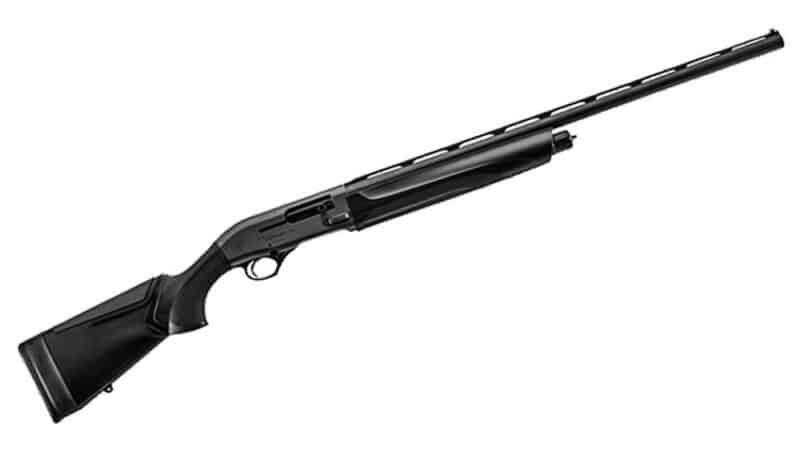
Those looking for a reliable semi-auto shotgun for under a grand need to look at the Beretta A300 Ultima. Available in both 12- and 20-gauge, the A300 features the Kick-Off recoil reduction system. This system reduces felt recoil for comfort and faster target acquisition. It even comes with a soft touch comb, as well as larger bolt handle and bolt release for faster manipulation (think reloading) in the field.
Decoys Work
Even though I have waterfowl hunted over decoys for years, I never really saw the point of decoying doves. Right up until I hunted with a guy who brought decoys.
He set up a dozen static decoys around the area, on the ground and in small trees and placed two spinners up high just off to the side. There weren’t that many birds flying that day, but the ones that came into the field came to the decoys.
Hunt Late, Day & Season
There is something to be said for watching the sun rise opening morning sitting on dove field. However, some of the best hunts I’ve ever had were in the evening. Where I grew up, a whole lot of people showed up for the opening morning. Only about half showed up that afternoon. Less people means that you can move locations and get a better spot.
Also, most people hunt the opening weekend, at most, even though that first season usually lasts a week or two. Then, there are later seasons that provide opportunities for migratory birds, rather than local doves, which is what we’re hunting in early September. When you’re out by yourself in the later seasons is a great time to consider decoys, especially on larger fields.
Remington 870 Wingmaster

Pumps might not be the preferred dove hunting shotgun, but some show up on the field every year. That’s because pump-action shotguns are absolutely reliable and affordable, especially the Remington 870 Wingmaster. With its twin action bars and machined receiver, the 870 is the standard for pump guns. Even better, the 870 has been out for more than 60 years, so used models are easy to find and even more affordable. This shotgun even comes in 12, 20 and .410 gauge, providing lots of options for shooters.
Never Stop Moving
This last tip seems counterproductive until you realize it is about the shotgun. The main reason people miss dove is by not following through with the shot. What this means is that they stop swinging the shotgun when they pull the trigger.
Those who want to hit more birds, in any type of shotgun situation, need to keep moving through the shot. It truly is that simple. Most folks don’t even realize that’s what they’re doing. Work on your follow through, especially during the warm up before season.


![The New Tikka ACE Rifles [Video]](https://qacontent.gunbroker.com/wp-content/uploads/2025/02/Tikka-Featured-SHOT-2025-400x267.png)
![Highlights of the Mossberg 590R and 590RM Shotguns [Video]](https://qacontent.gunbroker.com/wp-content/uploads/2025/03/Mossberg-590RM-590-R-Featured-400x267.jpg)
![Features of the New Beretta 20X Bobcat .22LR Pocket Pistol [Video]](https://qacontent.gunbroker.com/wp-content/uploads/2025/03/Beretta_20X-8-1200-x-800-400x267.jpg)
![Features of the Mossberg Professional Series 590 and 940 [Video]](https://qacontent.gunbroker.com/wp-content/uploads/2025/03/Mossberg_Professional_Series-7-1200-x-800-400x267.png)
![Beretta 92X Performance Gold Plated Limited Edition: Features [Video]](https://qacontent.gunbroker.com/wp-content/uploads/2025/03/Beretta_92X-Performance_Gold_Plated_featured-400x267.jpg)